
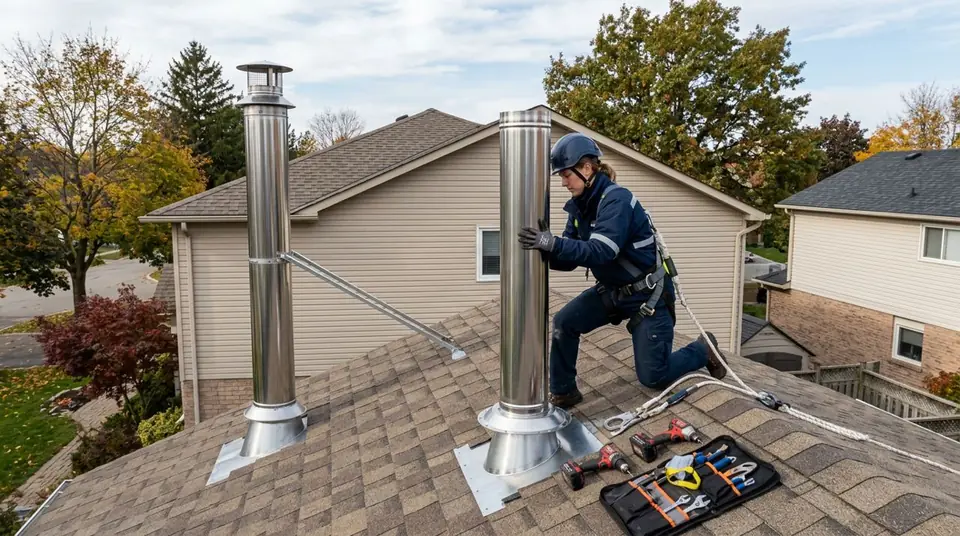
What chimney inspection means for a Ruskin property
Homeowners in Ruskin, Mission, British Columbia book a chimney inspection to understand condition before deciding on cleaning, repair or relining. The value of an inspection is a clear record of what was seen, what could not be seen and what is recommended next.
Wet coastal weather can expose caps, crowns and exterior masonry to repeated moisture. Those exterior conditions are separate from sweeping, but visible staining or water entry should be mentioned before the visit.
Mission is one of the supplied British Columbia coverage groups. Service availability is confirmed by address, system type and the work requested.
Ruskin is listed within the Mission coverage group. Service is confirmed by the property address, appliance and requested scope. The location page does not represent a separate office or promise a particular travel time.
What may be included and what is separate
Cleaning, repairs, camera scans of the full flue, liner replacement and appliance servicing are separate unless they are specifically agreed. This site does not publish unconfirmed certification claims, so ask directly about the scope and type of any report you need.
What a chimney inspection looks at
The result should be a clear summary of observed condition, plus a list of what could not be seen. Concealed areas such as joints behind finished walls cannot be confirmed by a visual check alone.
An inspection does not fix anything. It tells you whether cleaning, repair, a camera review or no further work is the sensible next step.
When Ruskin homeowners ask for an inspection
Buying or selling a home is one of the most common reasons. A pre-purchase inspection gives a buyer a clearer picture of the fireplace and chimney before closing, and gives sellers a record to share.
A fireplace that has not been used for years, a recent chimney fire, a storm, a tremor or a change of appliance are all good reasons to have the chimney looked at before lighting it again.
How British Columbia weather affects chimneys
Coastal and river-valley air carries moisture most of the year. Metal caps, chase tops and fasteners can rust, and rusty runoff often shows up as orange streaks on brick or siding. Those streaks are a useful clue to share when describing the concern.
Tall evergreens and shaded roof slopes are common across the region. Shade keeps roofs damp longer and encourages moss, which holds moisture against flashing and masonry. A chimney in a shaded spot can show wear sooner than a similar chimney in full sun.
Visual and camera inspections compared
A camera inspection sends a camera through the flue to look at joints and the liner from the inside. It is useful after a chimney fire, before relining, when a crack or leak is suspected, or for a detailed pre-purchase review.
The two are not interchangeable. Ask which level is included and what you will receive afterwards, such as photos, notes or a written summary.
Published Metro Vancouver planning range
Average cost for chimney inspection in Ruskin
$120–$500 CAD
Basic visual checks are usually at the lower end. Camera scans and more detailed investigations are usually at the higher end. This is general inspection pricing and not a certification claim.
These are published market estimates, not a fixed price from Chimney Sweep British Columbia. Tax, travel and additional work may be extra. A quote is confirmed only after the property and requested scope are reviewed.
Source: Published Metro Vancouver inspection cost guideWhat affects the price in Ruskin
The published range above is a planning guide, not a fixed company quote. Inspection pricing in Ruskin depends on the level of inspection, the number of flues, whether a camera is used, roof access and the type of written summary requested.
Ask what the inspection includes, whether the roof and exterior are viewed, whether a camera is used inside the flue and what you receive afterwards. Compare quotes at the same level of detail, because a quick visual check and a full camera review are different services.
What changes the price
Published ranges are a planning guide. These factors are the most common reasons a quote moves up or down.
| Factor | Why it matters |
|---|---|
| Number of flues | Each additional flue adds time and cleaning work |
| Roof pitch and chimney height | Steep or tall access needs more equipment and safety setup |
| Deposit severity | Glazed creosote needs more than a routine sweep |
| Appliance type | Inserts, stoves and gas units each need different work |
| Obstructions | Nests, debris or collapsed liner pieces add removal time |
| Travel and access | Distance, parking, gates and strata rules can affect timing |
Sweep, inspection, diagnosis and repair: what each covers
These services are often confused. Each one answers a different question, and one does not replace another.
| Service | Main purpose | What it involves | What it does not do |
|---|---|---|---|
| Chimney sweep or cleaning | Remove accessible soot and creosote | Brushing the agreed flue path and collecting debris | Does not certify the system or fix damage |
| Chimney inspection | Report on visible condition | Checking accessible components, sometimes with a camera | Does not include cleaning or repairs unless agreed |
| Draft or smoke diagnosis | Find why smoke or odour is a problem | Reviewing venting, pressure, caps and appliance setup | Does not guarantee a single fix |
| Masonry or component repair | Fix a confirmed defect | Work on crowns, mortar, caps, dampers or liners | Needs a defined scope first |
Fireplace and stove types compared
Each system type has its own venting and maintenance needs. Knowing yours helps match the request to suitable work.
| System | Common issues | Venting | Maintenance focus |
|---|---|---|---|
| Wood-burning masonry fireplace | Creosote, draft problems, mortar and crown wear | Masonry flue, often with a clay or metal liner | Regular sweeping and condition checks |
| Wood stove or insert | Creosote in a smaller, cooler flue | Stainless steel liner or factory-built chimney | Sweeping based on use and wood quality |
| Pellet stove | Ash buildup, fan and igniter wear | Dedicated pellet vent pipe | Vent and appliance cleaning per manufacturer guidance |
| Gas fireplace or insert | Ignition, glass film, venting and soot from poor combustion | Direct vent or B-vent | Servicing by a qualified gas technician |
Gas appliances must only be adjusted by a licensed gas technician. Never adjust gas components yourself.
How a Ruskin service request works
- Step 1
Explain the reason
Share the Ruskin address, appliance, fuel and why you want the inspection.
- Step 2
Scope match
The level of inspection is matched to the reason, such as a sale, leak or symptom.
- Step 3
Price and timing
Access, timing and pricing factors are discussed before the visit is confirmed.
- Step 4
Inspection and summary
Findings, limits and recommended next steps are explained after the visit.
Ruskin property and access considerations
Mission is one of the supplied British Columbia coverage groups. Service availability is confirmed by address, system type and the work requested.
Roof pitch, chimney height and tree cover affect whether the exterior can be viewed safely on the day. If roof access is not possible, the summary should say so clearly.
Reading the inspection results
If repair is recommended, ask for the scope in writing and compare like with like. An inspection finding is a starting point for a quote, not a quote itself.
A useful summary separates urgent concerns from maintenance items. It should explain what was found, why it matters and what is recommended, with photos where possible.
How to prepare for an inspection
Have the appliance model, any previous reports and the reason for the inspection ready. If it is for a sale, mention any deadline so timing can be discussed.
Take photos only from inside the home or from the ground. Never climb onto the roof to look at the chimney yourself.
After the inspection
Keep the summary with your property records. It is a useful baseline when comparing future inspections or answering buyer questions.
Act on urgent findings before using the appliance again. Maintenance items can be planned, but they should not be ignored for years.