
What chimney repair means for a Guildford property
Chimney repair in Guildford, Surrey, British Columbia starts with finding out what has actually failed. Cracked crowns, loose bricks, worn mortar joints, leaking flashing and a damaged cap each need a different fix, so the work is scoped from the observed condition rather than a fixed package.
Dense neighbourhood streets, attached housing and multi-unit properties may require extra access coordination. Tell us about gates, strata rules, shared flues or restricted parking when sending the enquiry.
Surrey is one of the supplied British Columbia coverage groups. Service availability is confirmed by address, system type and the work requested.
Guildford is listed within the Surrey coverage group. Service is confirmed by the property address, appliance and requested scope. The location page does not represent a separate office or promise a particular travel time.
What may be included and what is separate
Full chimney rebuilds, liner replacement, roofing work, interior drywall or ceiling repair and appliance repair are separate unless they are specifically assessed and included. A repair visit does not certify the complete chimney or appliance.
What chimney repair covers
A good repair addresses the cause as well as the symptom. Sealing a stain on the ceiling without fixing failed flashing or a cracked crown usually means the problem returns. The assessment should explain why the damage happened.
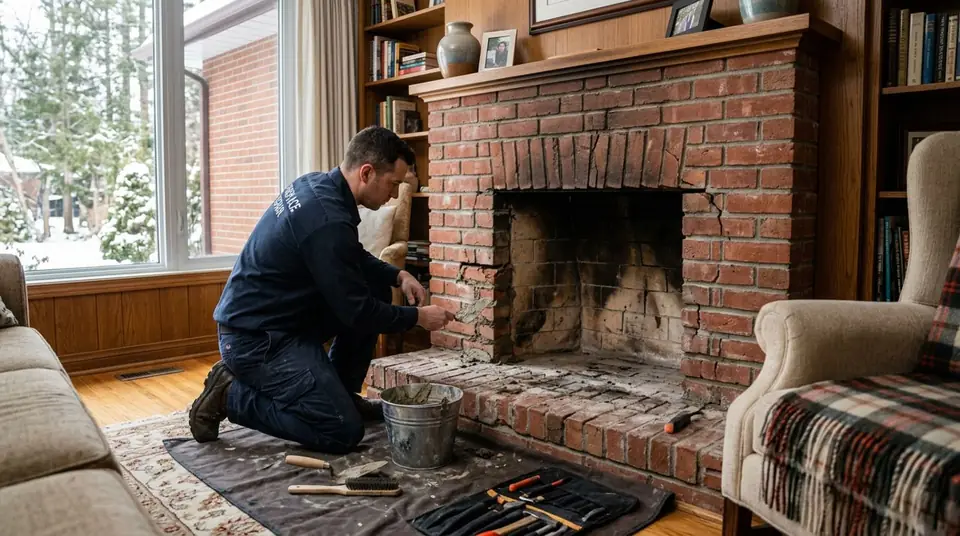
Chimney repair is targeted work on a part that has failed. That might be repointing worn mortar joints, replacing damaged bricks, repairing or rebuilding a crown, resealing or replacing flashing, fitting a new cap, or fixing a damper. Each has its own method and price.
Signs that lead to repair requests in Guildford
Mortar that crumbles when touched from the ground, brick faces that flake off, white powdery deposits on brick and pieces of masonry in the firebox are all reasons to ask for an assessment. Watch from a safe spot rather than climbing up.
A cap that has tilted, a chimney that looks like it is leaning, or gaps between the chimney and the roof are visible from the ground. Photographs taken safely from the yard help explain the concern before a visit.
How British Columbia weather affects chimneys
Tall evergreens and shaded roof slopes are common across the region. Shade keeps roofs damp longer and encourages moss, which holds moisture against flashing and masonry. A chimney in a shaded spot can show wear sooner than a similar chimney in full sun.
The Lower Mainland and Fraser Valley see long wet seasons. Rain driven against a chimney can soak into brick and mortar, and water that freezes during cold snaps expands and loosens the surface. That cycle is a common reason older masonry chimneys show flaking brick faces and open joints.
Common chimney repairs explained
Flashing seals the joint between the chimney and the roof. When it lifts, rusts or separates, water can run into the attic or ceiling. Flashing repair can involve roofing materials and coordination with the roof covering.
The crown is the top slab that sheds water away from the flue. Cracked crowns let water into the chimney. Small cracks may be sealed, while a badly damaged crown may need to be rebuilt.
Published Metro Vancouver planning range
Average cost for chimney repair in Guildford
$150–$3,500 CAD
Minor sealing or localized repair can sit near the low end, while moderate masonry work can reach the upper end. Structural rebuilding is priced separately.
These are published market estimates, not a fixed price from Chimney Sweep British Columbia. Tax, travel and additional work may be extra. A quote is confirmed only after the property and requested scope are reviewed.
Source: Published Metro Vancouver repair cost guideWhat affects the price in Guildford
The published range above is a planning guide, not a fixed company quote. Repair pricing in Guildford depends on the component involved, how far the damage extends, the materials needed, chimney height, roof pitch and whether scaffolding or other access equipment is required.
Ask whether the quote covers only the visible defect or also the cause behind it. A crack repaired without addressing water entry can return. If hidden damage is found once work starts, the revised scope and cost should be explained before additional work proceeds.
What changes the price
Published ranges are a planning guide. These factors are the most common reasons a quote moves up or down.
| Factor | Why it matters |
|---|---|
| Number of flues | Each additional flue adds time and cleaning work |
| Roof pitch and chimney height | Steep or tall access needs more equipment and safety setup |
| Deposit severity | Glazed creosote needs more than a routine sweep |
| Appliance type | Inserts, stoves and gas units each need different work |
| Obstructions | Nests, debris or collapsed liner pieces add removal time |
| Travel and access | Distance, parking, gates and strata rules can affect timing |
Sweep, inspection, diagnosis and repair: what each covers
These services are often confused. Each one answers a different question, and one does not replace another.
| Service | Main purpose | What it involves | What it does not do |
|---|---|---|---|
| Chimney sweep or cleaning | Remove accessible soot and creosote | Brushing the agreed flue path and collecting debris | Does not certify the system or fix damage |
| Chimney inspection | Report on visible condition | Checking accessible components, sometimes with a camera | Does not include cleaning or repairs unless agreed |
| Draft or smoke diagnosis | Find why smoke or odour is a problem | Reviewing venting, pressure, caps and appliance setup | Does not guarantee a single fix |
| Masonry or component repair | Fix a confirmed defect | Work on crowns, mortar, caps, dampers or liners | Needs a defined scope first |
Fireplace and stove types compared
Each system type has its own venting and maintenance needs. Knowing yours helps match the request to suitable work.
| System | Common issues | Venting | Maintenance focus |
|---|---|---|---|
| Wood-burning masonry fireplace | Creosote, draft problems, mortar and crown wear | Masonry flue, often with a clay or metal liner | Regular sweeping and condition checks |
| Wood stove or insert | Creosote in a smaller, cooler flue | Stainless steel liner or factory-built chimney | Sweeping based on use and wood quality |
| Pellet stove | Ash buildup, fan and igniter wear | Dedicated pellet vent pipe | Vent and appliance cleaning per manufacturer guidance |
| Gas fireplace or insert | Ignition, glass film, venting and soot from poor combustion | Direct vent or B-vent | Servicing by a qualified gas technician |
Gas appliances must only be adjusted by a licensed gas technician. Never adjust gas components yourself.
How a Guildford service request works
- Step 1
Describe the damage
Share the Guildford address, what you have seen and when it started.
- Step 2
Assessment
The damaged component and likely cause are reviewed before repair options are proposed.
- Step 3
Written scope
Repair method, materials, access and price factors are explained before approval.
- Step 4
Repair visit
The agreed repair is completed and anything outside the scope is noted.
Guildford property and access considerations
Roof pitch, chimney height and how close the chimney is to trees or neighbouring buildings all affect how repair work is planned. Steep roofs and tall stacks may need extra access equipment, which changes timing and price.
Strata buildings, rentals and attached homes may need permission before exterior work begins. If the chimney is shared, confirm who is responsible for the structure before approving repairs.
Repair or rebuild: how the decision is made
Localized damage is usually repaired. When much of the masonry is loose, the chimney leans, or repairs have failed repeatedly, a partial or full rebuild may be discussed. The decision should rest on what was observed, with clear reasons.
Ask for the options in writing. A clear quote separates the immediate repair from optional work, and explains what may happen if a repair is postponed. That makes it easier to plan around a budget.
How to prepare for a repair visit
Tell us about gates, parking limits or strata rules ahead of time. If someone other than the owner will be home, make sure they know what has been approved.
Stop using the fireplace or stove before the visit and let it cool fully. Clear the hearth area, move vehicles if access is needed near the chimney and secure pets. Do not climb onto the roof to check the damage yourself.
After the repair
Regular cleaning and periodic inspection help catch new problems early. A repaired chimney still needs maintenance suited to how often the fireplace or stove is used.
If you plan to sell, records of recent chimney repair can help answer buyer questions. Be accurate about what was done and what was not.